
ATEX: Understanding Safety Requirements
An explosive atmosphere (ATEX) can form when combustible gases, vapors, mists, or dusts mix with air in proportions that allow combustion to spread after ignition.
Two European directives set out the responsibilities:
- 1999/92/EC — the employer and the workplace: assess explosion risks, establish zoning, prepare the explosion protection document (DRPCE), select appropriate equipment, and organize prevention, training, and maintenance.
- 2014/34/EU — Equipment and protective systems: comply with the essential health and safety requirements and apply the conformity assessment procedure appropriate to the equipment and its category.
A distinction must be made between zoning within a facility and zoning in its surrounding area. The choice of equipment takes into account the product, operating conditions, and applicable labeling requirements.
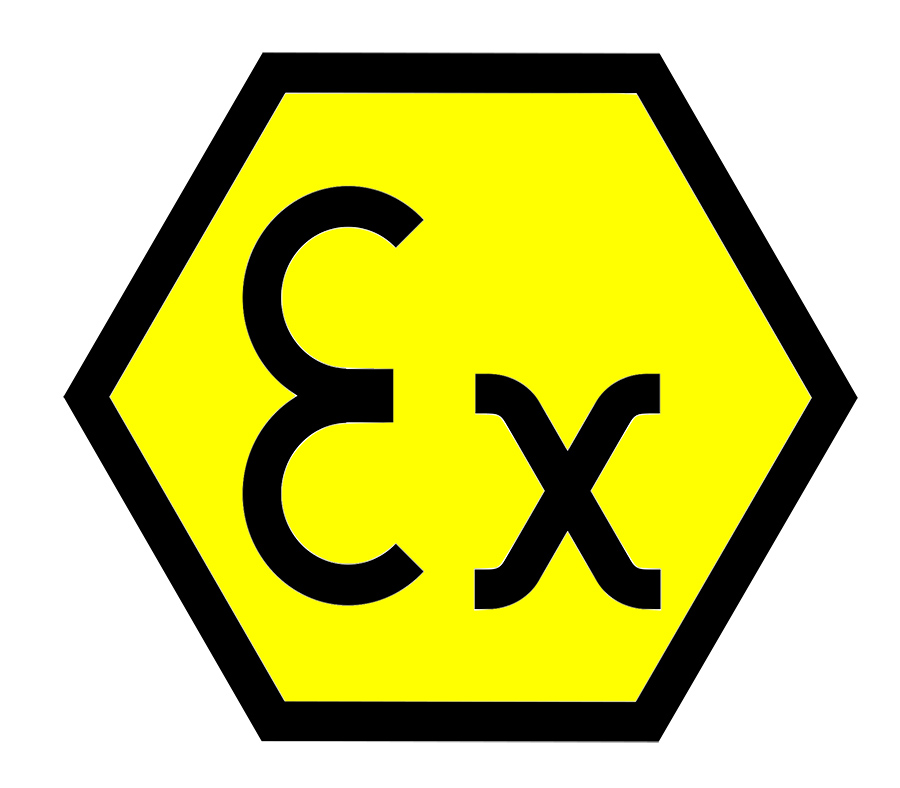
Since 2007, an ATEX compliance program evaluated by INERIS
Since 2007, Transitube has placed ATEX risk management at the heart of the design and manufacture of its transfer and metering systems. This approach is supported by a type examination certificate issued by INERIS and by a production quality assurance program monitored by this notified body.

A Type Test Certificate: More Than Just Filing an Application
Type Examination Certificate: INERIS 07ATEX0054X
Production Quality Assurance: INERIS 11ATEXQ401
Type examination involves an assessment of the device type by a notified body. It differs from the internal manufacturing control procedure with submission of the technical file, which applies to certain non-electrical Category 2 devices. An acknowledgment of receipt of the technical file does not constitute a type examination certificate.
The equipment covered by our certification is marked II 1D/2GD, depending on its configuration. Category 1D corresponds to the level of protection required for a Zone 20 dust atmosphere inside the equipment. The classification and permissible conditions for outdoor use must be verified separately.
The selection must comply with the scope of the certification, the equipment markings, and the installation, use, and maintenance instructions. The suffix “X” indicates specific conditions of use that must be followed.
Involvement in CLATEX's technical exchanges
Thierry Carbonell, CEO of Transitube SAS, is a member of CLATEX—the ATEX Equipment Liaison Committee. This committee brings together government agencies, manufacturers, users, notified bodies, and standards organizations to address issues related to the implementation of ATEX regulations.
This involvement contributes to our technical and regulatory monitoring as well as our dialogue with manufacturers. It does not constitute certification of the equipment by CLATEX.
Combustible Dust: What Are the Risks of Ignition?

A combustible powder can form an explosive atmosphere when dispersed in the air at a sufficient concentration in the presence of an ignition source capable of igniting it.
The minimum ignition energy (MIE) characterizes the sensitivity of the dust cloud; it is not an additional source of energy. Particle size, moisture content, and process conditions also influence the risk.
Inflammation can cause a flash fire. Containment can exacerbate the phenomenon and its pressure effects; resuspended dust deposits can also fuel secondary explosions.
The analysis is based on the product's characteristics, including its EMI, ignition temperatures, Kst, and maximum explosion pressure, depending on the requirements of the study.
Examples of materials whose dust may be explosive, depending on their characteristics and the conditions under which they are used:
- Sugar
- Flour
- Coffee
- Milk powder
- Starch
- Magnesium
- Aluminium
- Sulphur
- Cellulose
- Coal
- Wood
- Polystyrene
- Vitamin C
- Cocoa
- Polyethylene